


In 1996, a guy in Topeka built a website dedicated entirely to his hamster. It had a visitor counter, a MIDI file that auto-played when you landed on the page, and a guestbook where strangers left messages like “cool hamster.” It served no commercial purpose. It solved no problem. It was glorious.
That same year, a web ring connected fourteen sites about medieval swordcraft. Someone built a page that was just a single animated GIF of a dancing baby on a black background. Another person created a choose-your-own-adventure story using nothing but hyperlinks. The internet was a playground with no supervisor and no business model, and people were building things for the purest reason imaginable: because they suddenly could.
We forget this. We talk about the internet now like it was always destined to become Google and Amazon and Meta. But before the compression came, there was this extraordinary window of creative anarchy. Regular people, many of whom had no technical background beyond a library book on HTML, were putting pieces of themselves online for the first time in human history. The web was personal, strange, sometimes ugly, and completely alive.
Then it got tidied up. Platforms emerged. The wild web was organized into feeds and search results and walled gardens. The energy didn’t disappear, but it got channeled. Consolidated. Monetized. The hamster site went dark. Facebook became a verb.
The App Store Gold Rush
Apple launched the App Store in July 2008, and the whole cycle restarted.
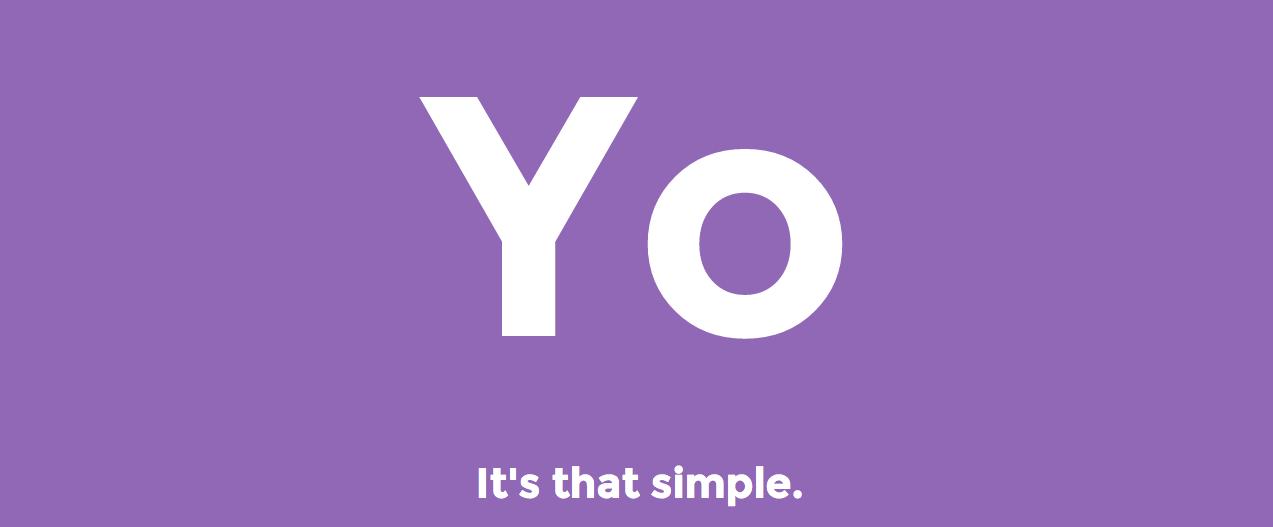
Suddenly, anyone with an idea and a developer could put software on millions of phones. And what did people build? A flashlight app (your phone’s screen just turned white). An app called “I Am Rich” that cost $999.99 and did absolutely nothing except prove you’d spent $999.99. An app called “Yo” that lets you send the word “Yo” to your friends. That’s it. That was the whole app. It raised $1.5 million in venture funding.
People made apps that turned your phone into a virtual lighter. Apps that made fart sounds. Apps that let you pop bubble wrap on your screen forever. A developer created “Hold On,” a game where you just held your finger on the screen for as long as possible. Someone built “Nothing,” which was, true to its name, an app that did nothing at all.
It was absurd. It was wonderful. It was humans doing what humans always do when you hand them a new creative tool: playing with it like kids who just discovered finger paint.
And then, just like the web before it, it compressed. The app economy matured. Investors wanted unit economics. Users settled into their 30 essential apps. The average person uses about 30 apps a month, but spends nearly all their time in the same handful. The playground became a strip mall.
We’re Standing at the Edge of Wave Three
Right now, something is shifting again. AI-assisted building tools, no-code platforms, and what people are calling “vibe coding” have dropped the barrier to creation to its lowest point ever.
I know because I just lived it. A few weeks ago, I built an app. Not a mockup. Not a prototype. A functioning application. I’m a strategist, not an engineer. I’ve never written production code in my life. But I sat down with an AI coding tool, described what I wanted, iterated on it conversationally, and had something working in a weekend. I posted about the experience on LinkedIn, and the response was immediate and intense. People were fascinated, skeptical, curious, excited, and nervous.
That reaction told me everything. We’re in the opening minutes of the experimental phase again. And if history is any guide, what comes next is going to be beautifully weird.
The Width of the Wave
Each cycle has expanded the creator pool dramatically.
The early web required you to learn HTML. You had to understand file structures, FTP uploads, and maybe some rudimentary CSS. The creator pool was millions.
The app era required a developer, or the resources to hire one, plus knowledge of platform guidelines, app store submissions, and software architecture. The creator pool was smaller than it looked, but it produced more polished output.
This wave? The barrier to entry is an idea and the ability to describe it in plain language. The creator pool is, for the first time, essentially everyone with access to robust AI tools.
Think about what that means for the experimental phase. When a few million people had access to web publishing tools, we got hamster fan sites and dancing baby GIFs. When a few hundred thousand developers had access to app distribution, we got Yo and iFart and Hold On. When billions of people have access to AI-powered building tools?
The volume of weird, creative, pointless, personal, passionate, bizarre, delightful things about to come into existence is hard to fathom. We’re going to see apps built for an audience of one. Tools that solve problems so specific they border on absurd. Creative experiments that make the dancing baby look conservative. Someone is going to build a fully functional app for tracking how many times their cat sits in a specific chair, and it’s going to be perfect, and it’s going to matter to exactly one person, and that’s going to be enough.
The Fun Part
The experimental phase is the fun part. Every time. And we keep forgetting that.
We’re so conditioned to evaluate new technology through the lens of scale, monetization, and disruption that we skip past the actual magic: the moment when people pick up a new tool and start making things that nobody asked for. The phase when voluntary participation is feral and hilarious.
Nobody asked for a hamster website. Nobody asked for an app that just says “Yo.” Nobody asked for the weird little vibe-coded passion projects that are starting to pop up everywhere right now. They exist because creation is a fundamental human impulse, and when you lower the barrier, that impulse floods through the gap.
This is what I keep coming back to in my work on participation. We talk about engagement, about users, about audiences. But what actually drives people is the desire to make something. To put a piece of themselves into the world. To participate in the act of creation, not just the consumption of what others have created.
Every technology wave proves this. Give people tools, and they don’t sit around calculating ROI. They build hamster shrines and fart apps and things that make their friends laugh. The commercial layer always comes later. The first instinct is always play.
But Will It Compress the Same Way?
This is the question I find most interesting. Because twice now, we’ve watched a creative explosion get consolidated into a handful of dominant platforms. The wild web became Big Tech’s internet. The app gold rush became the App Store duopoly. The pattern suggests that this wave will compress too, with a few AI-powered platforms absorbing all that chaotic creative energy into tidy, monetizable channels.
Maybe. But I think something different might happen this time.
In previous waves, the compression was driven by distribution. You needed Google to be found on the web. You needed the App Store to reach mobile users. Distribution was the bottleneck, and whoever controlled it controlled the wave.
But when AI makes building trivially easy, distribution changes shape. You don’t necessarily need a platform to reach people when you can build something tailored for a specific community, a specific need, a specific group of twelve people who care about the same obscure thing you do. The organizing layer might not be a corporation. It might be communities themselves, curating and sharing and building on each other’s creations.
If that happens, the next phase will look less like consolidation and more like coordination. Less like five companies winning and more like thousands of communities thriving. The energy doesn’t get funneled up into platforms. It gets distributed across networks of people who are all participating together.
I don’t know if that’s what will happen. But for the first time in three waves, the conditions exist for it. And that alone makes this moment worth paying very close attention to.
For Now, Enjoy the Weird
We’re in the opening act. The dancing baby era of AI-powered creation. A few years from now, we’ll look back at this period the way we look back at GeoCities and the App Store gold rush: with nostalgia for the chaos, the playfulness, the willingness to build something just to see if you could.
So if you’ve been curious about vibe coding, or no-code tools, or building something with AI that nobody asked you to build, now is the time. Not because it’ll scale. Not because it’ll make money. Because the experimental phase is the best phase, and we only get to live through it once per wave.
Go build your hamster site.
A quick ask: Have you vibe-coded something? Built an app, a tool, a weird little experiment using AI or no-code tools? I want to see it. Reply to this post or drop me a note with what you made, why you made it, and how it felt to make it. I’m collecting stories from the experimental phase in real time, and the weirder the better. Future issues of The Participation Exchange will feature the best submissions. Show me your hamster sites.