


In March of 2016, the UK’s Natural Environment Research Council (NERC)—a serious organization of serious scientists doing serious work—made a decision that seemed, at the time, like a charming bit of public engagement.
They were building a ship. Not just any ship. A £200 million polar research vessel, 129 meters long, designed to conduct world-leading science in the Arctic and Antarctica. A monument to British ingenuity and commitment to understanding our planet. They wanted the public to feel connected to this magnificent beast of a ship while also boosting awareness of the important research it would enable.
So they asked the internet to name it.
You already know where this is going.
Enter James Hand
James Hand was a BBC Radio Jersey presenter. Not a prankster. Not a troll. Not a chaos agent with a sinister agenda. Just a man with a whim and a Twitter account who, on the day the naming poll launched, typed two words that would haunt a government agency for years:
Boaty McBoatface.
He hit send. He moved on with his day.
Within 24 hours, the name was leading the poll by 8,000 votes. Within a week, James Hand was appearing on the BBC apologizing, while simultaneously calling it “a brilliant name” with “legs of its own.” The poll site crashed under the traffic. More than 7,000 names were submitted in total, but Boaty McBoatface won with 124,109 votes. Its nearest competitor got roughly 34,000.
That second place entry, for the record, was named after a 16-month-old girl with incurable cancer. That’s the kind of gravity and sincerity that Boaty McBoatface beat.
The Crowd Was Not Wrong
What gets lost in the telling of this story is that the people who voted for Boaty McBoatface weren’t saboteurs. They weren’t disengaged cynics trying to ruin something nice. They weren’t trying to cause trouble anymore than James Hand was trying to create consternation in the British scientific community. Those voters were people who showed up, paid attention, and voted with genuine delight.
That IS participation. That is exactly what participation looks like when it’s working.
The crowd found the most joyful option in the field and ran toward it at full speed. They didn’t misunderstand the assignment; they rewrote it. They saw a formal institution extending an unusual invitation and they accepted it on their own terms, which is what humans have always done when a door is opened.
NERC wanted consultation. They wanted a polite crowd that would suggest dignified names and feel good about being asked. What they got was something messier and more alive: genuine participation, full of irreverence and wit and collective energy. And since that wasn’t what they anticipated, they panicked.
The Override
The British Science Minister, Jo Johnson, hinted pretty quickly that the result might not be honored. His reasoning was entirely reasonable and entirely beside the point. The ship would be doing important science on climate change and rising sea levels, deserving a name with appropriate gravity. That much was true. But the moment had already moved somewhere else.
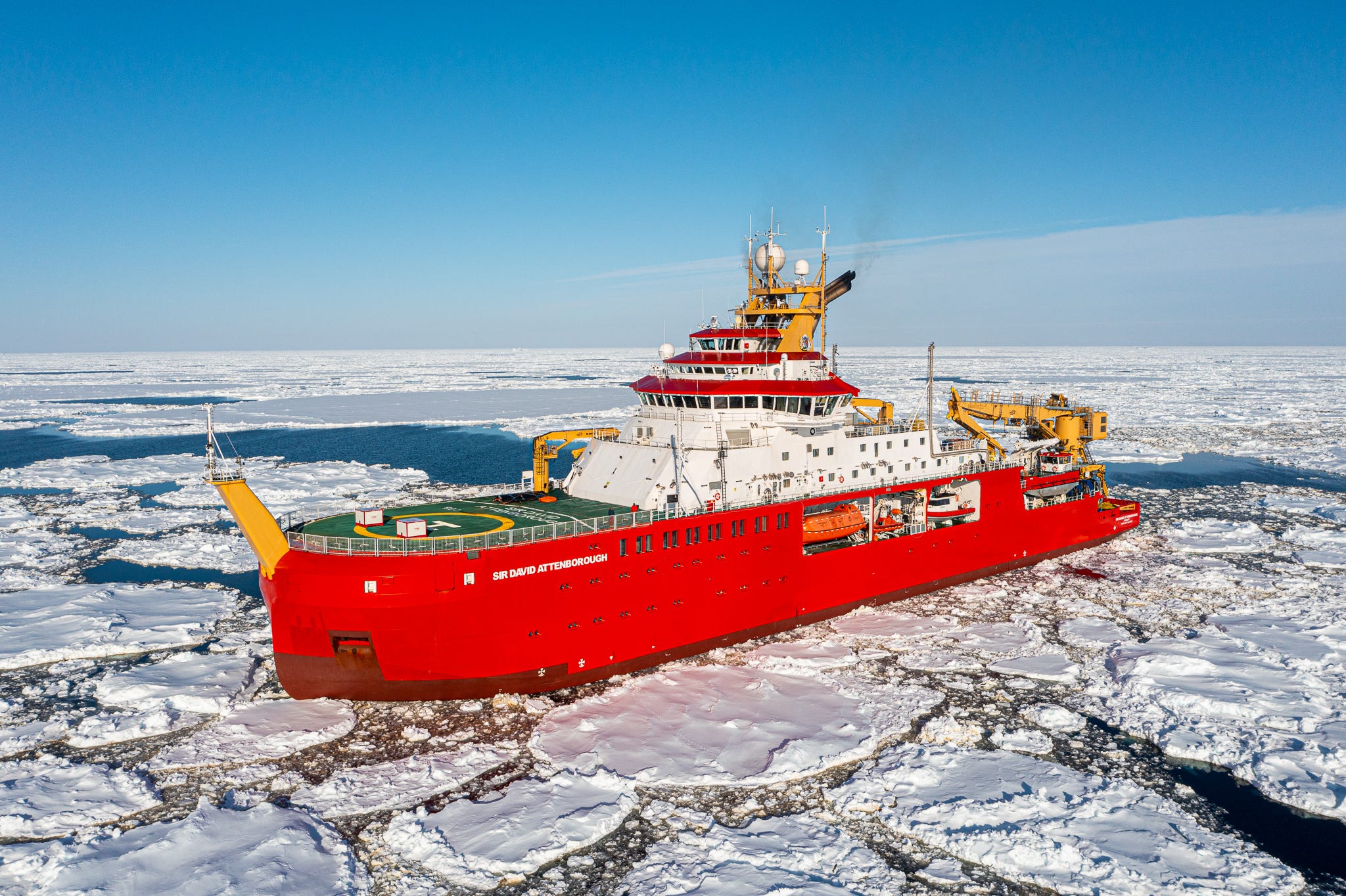
Credit: Photograph by Jamie Anderson / British Antarctic Survey.
NERC later confirmed what everyone suspected: the ship would be named RRS Sir David Attenborough, after the beloved naturalist who had come fourth in the vote with roughly 11,000 votes. The public, predictably, lost its mind. Newspaper editorials. Social media outrage. The full democratic grievance cycle.
It was better, in the public's mind, to have never asked for input at all than to ask and ignore.
Harvard Business School researchers actually studied this episode afterward and found something striking: people who were told that NERC overrode the vote were significantly less satisfied with the institution than people who were told that no vote had ever been held. Let that land for a moment: It was better, in the public’s mind, to have never asked for input at all than to ask and ignore. The act of inviting participation created an implied contract. Breaking it felt like a betrayal.
Asking for input is not neutral. When you ask, you’re making a promise. Design your participation system with that promise in mind before you launch it, not after.
The Accidental Masterpiece
The British instinct in these situations is to contain the damage; to find the smallest possible concession that satisfies the loudest possible voices. What NERC actually did, whether by accident or by genuine wit, was something more interesting than that. They gave the name a job.
In what NERC’s own executive called “an eloquent compromise,” the name Boaty McBoatface was assigned to one of the ship’s remotely operated submersibles. A small, autonomous underwater vehicle designed to reach depths of 6,000 meters and journey independently beneath polar ice. That also happened to be cute and yellow.
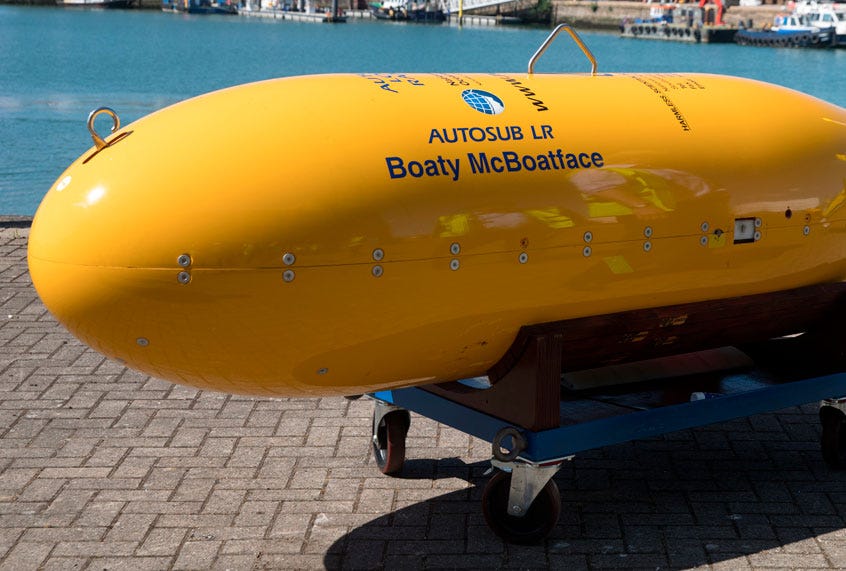
Credit: Photograph by Matt Cardy / Getty Images
Here is where the story stops being about institutional embarrassment and starts being about something else entirely. A submersible has no press office. It does not give interviews or manage its reputation. It simply goes where it’s sent, does what it’s designed to do, and comes back with data.
Boaty McBoatface, it turned out, was very good at this.
It completed its first under-ice mission in the Weddell Sea, spending 51 hours beneath Antarctic ice and traveling 108 kilometers at depths approaching 1,000 meters. It sniffed for carbon capture leakage on the seafloor. It became a beloved educational ambassador, teaching children across the globe about STEM through a curriculum that bore its ridiculous, whimsical name. In 2017, it became a category on Jeopardy.
Then it kept going. In August 2024, Boaty completed a fully autonomous 2,000-kilometer voyage from Iceland to Scotland. It has since been deployed beneath the Dotson and Thwaites ice shelves, mapping warm-water intrusion and seafloor turbulence that feeds directly into sea-level-rise models. The joke name is now emblazoned on scientific papers.
Meanwhile, the RRS Sir David Attenborough, the dignified, gravity-appropriate vessel with the respectable name, is largely unknown outside oceanographic circles.
The crowd named the right thing. They just named it before they knew it existed.
McBoatfacing
The cultural residue of this whole episode is a word: McBoatfacing. Defined, with no small amount of institutional bitterness, as “making the critical mistake of letting the internet decide things.”
I’d like to propose a different definition.
McBoatfacing is designing a participation system without thinking through what you’re actually inviting. It’s opening the door, being surprised when people walk through it, and then blaming the people.
The mistake wasn’t the crowd. The crowd was magnificent and enthusiastic and true to itself. The mistake was architectural. NERC gave the public a wide-open text field and asked for “inspirational names” with no guardrails, no shortlist, no defined criteria, and, critically, no honest signal about how the input would be weighted in the final decision. They designed a participation theater and got actual participation. Surprise, chaos, headlines.
Good participation design would have looked different. A curated shortlist voted on by the public. Or an open submission with a clearly communicated editorial filter. Or, the boldest option of all, a genuine commitment to honor the result, full stop, because you believe the crowd’s collective instinct is worth trusting.
Any of those would have worked. What doesn’t work is inviting the crowd into your space and then frowning when they sit on the furniture.
The Thing About Boaty
I keep thinking about that little yellow submarine in the dark water under the Antarctic ice.
It went down there with a name that made people laugh. It came back up with data that helps us understand how the planet’s oceans circulate heat, which is one of the most important questions in climate science. The joke became the mission. The irreverence became the icon. What everyone was embarrassed about became what everyone now loves.
Something real is at work in that outcome. When participation is genuine, even imperfect, even messy, even when it doesn’t go the way the institution planned, it tends to find its way to something true.
The crowd gave that submarine a name with joy in it. And that submarine has been carrying that joy into the deep ocean ever since.
I’ll be honest; I still chuckle when I say it out loud. Boaty McBoatface. It’s just a perfect piece of language. Absurd and rhythmic and somehow exactly right. Singed into the Internet’s collective memory forever.
Do you remember when this happened? Do you remember the moment you first heard the name and laughed?